搜索专题

必备技能

  • STL
  • 队列
  • 优先队列

那就可以了


fc(DFS&BFS)

相信大家都对搜索(深搜/款搜)有了一定程度上自己的理解了

然后据我所了解,可能大家对这两个东西的区分度可能不是特别高,然后请允许我来口胡(对比、分析?)一下这两个东西

先来一个小练习:

用搜索求斐波那契数列的第\(n\)

可能在座的各位已经会了递推求解、矩阵快速幂求解、通项公式求解

但还是希望大家能拿起自己的草稿纸,画一画这个运行的大概的过

斐波那契数列
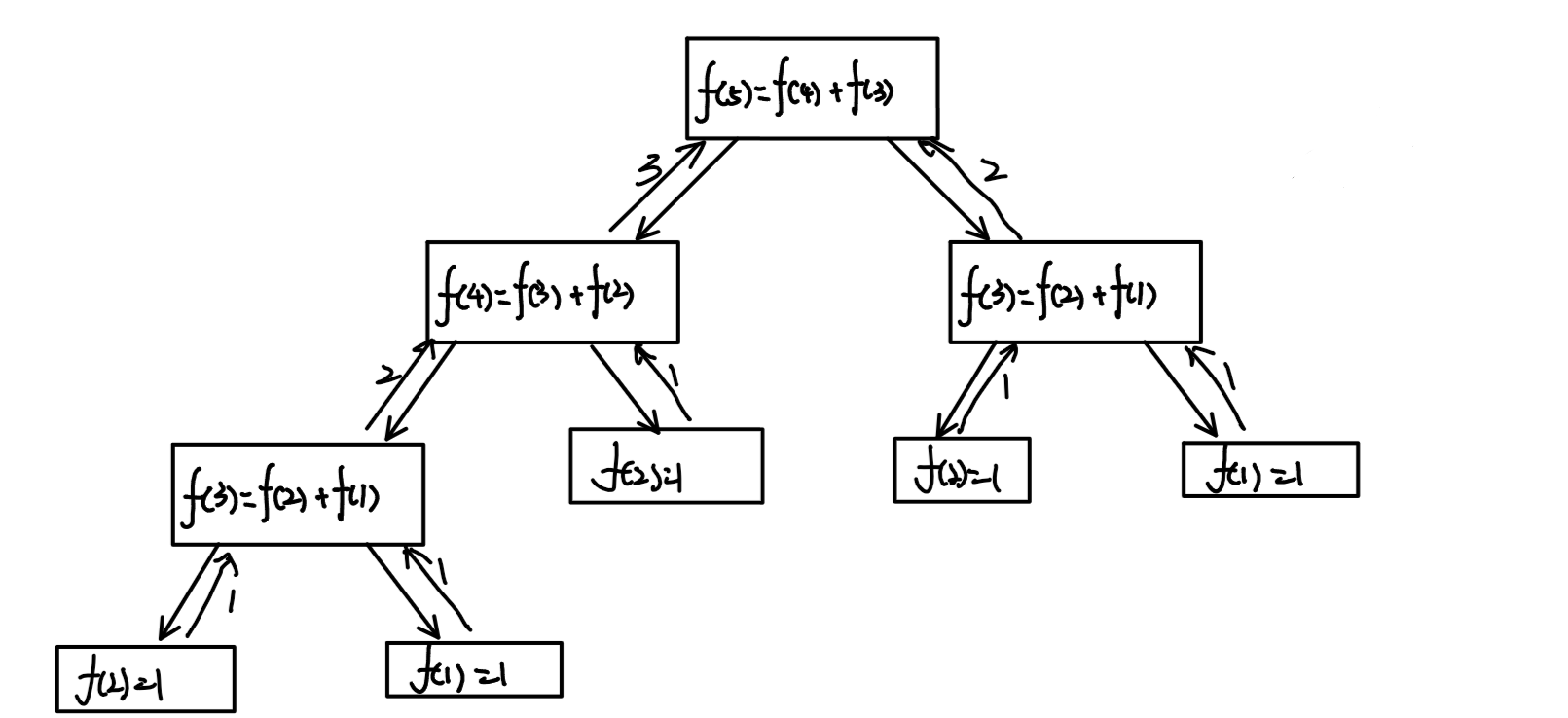
优势:

  • 适合状态不易储存的情况
  • 有时候对子问题的依赖很强
  • 符合人类的思考习惯

劣势:

  • 很容易超时
  • 很容易爆栈

优势:

  • 适合状态容易储存的问题
  • 不容易爆栈(搜索深度远大于\(\text{DFS}\)
  • 能够将父状态继承给子状态
  • 可以跑最短路啊,各种最优化问题

劣势:

  • 可能产生大量的无用状态导致\(MLE\)
  • 对某些数据结构的要求有点高

接下来干嘛,练题?

太没意思了吧。。。

来点有意思的?


奇技淫巧一:记忆化搜索(伪dp)

先让大家用搜索求一求

斐波那契数列
1
2
3
4
5
6
7
8
9
10
11
12
13
14
15
16
17
18
19
20
21
22
23
24
25
26
#include <bits/stdc++.h>

using namespace std;

typedef long long ll;
const ll maxn = 1e5 + 10;
const ll mod = 1e9 + 7;

ll n, Feb[105] = {0, 1, 1};

ll feb(ll x)
{
if (x == 1 || x == 2) return 1;
return (feb(x - 1) + feb(x - 2)) % mod;
}

int main()
{
scanf ("%lld", &n);
for (ll i = 3; i <= n; ++i)
Feb[i] = (Feb[i - 1] + Feb[i - 2]) % mod;
printf ("%lld\n", Feb[n]);
system("pause");
printf ("%lld\n", feb(n));
system("pause");
}

好像\(n\)\(40\)开始,这两个方式跑出来的时间差距就越来越大了

咋搞?

嗯,如题:记忆化

code
1
2
3
4
5
6
7
8
9
10
11
12
13
14
15
16
17
18
19
20
21
22
23
24
25
26
27
28
#include <bits/stdc++.h>

using namespace std;

typedef long long ll;
const ll maxn = 1e5 + 10;
const ll mod = 1e9 + 7;

ll n, Feb[105] = {0, 1, 1};
ll ans[105];

ll feb(ll x)
{
if (x == 1 || x == 2) return 1;
if (ans[x]) return ans[x];
return ans[x] = (feb(x - 1) + feb(x - 2)) % mod;
}

int main()
{
scanf ("%lld", &n);
for (ll i = 3; i <= n; ++i)
Feb[i] = (Feb[i - 1] + Feb[i - 2]) % mod;
printf ("%lld\n", Feb[n]);
system("pause");
printf ("%lld\n", feb(n));
system("pause");
}

其实这个没有什么不一样的

就是记忆化,请大家\(YY\)一下就好

来点例题?

SHOI2012滑雪

solution

那么就是用一个\(f[i][j]\)来记录在\((i,j)\)能往下滑的最大距离

那么转移的话就是 \[ f[i][j]=max(f[i-1][j], f[i+1][j],f[i][j-1],f[i][j+1])+1 \] 当然,这个方程并不完全正确,大家还需要判断一下边界条件和这个高度的大小

1
2
3
4
5
6
7
8
9
10
11
12
13
14
15
16
17
18
19
20
21
22
23
24
25
26
27
28
29
30
31
32
33
34
35
36
37
38
39
40
41
#include <bits/stdc++.h>

using namespace std;

typedef long long ll;
const int maxn = 1e5 + 10;
const int mod = 1e9 + 7;

int n, m, ans;
int f[105][105], h[105][105];
int mx[] = {1, -1, 0, 0};
int my[] = {0, 0, 1, -1};

int dfs(int x, int y)
{
if (f[x][y]) return f[x][y];
f[x][y] = 1;
for (int i(0); i < 4; ++i) {
int nx = x + mx[i];
int ny = y + my[i];
if (nx < 1 || nx > n || ny < 1 || ny > m) continue;
if (h[nx][ny] >= h[x][y]) continue;
f[x][y] = max(f[x][y], dfs(nx, ny) + 1);
}
return f[x][y];
}

int main()
{
cin >> n >> m;
for (int i(1); i <= n; ++i)
for (int j(1); j <= m; ++j)
cin >> h[i][j];

for (int i(1); i <= n; ++i)
for (int j(1); j <= m; ++j)
ans = max(ans, dfs(i, j));

cout << ans << endl;
system("pause");
}

Achen

solution

手动模拟一下

会发现,其实\(A/B\)左右是否是空的,对于这道题没有本质的影响

因为要走遍所有的点的话,这只有一种方案

然后\(A/B\)的顺序对于本题也没有本质影响

来两张图?

好像就是如果\(A\)不是最靠左的点,那么\(A\)的实际位置应该是再往右走一格的位置,\(B\)也同理

那么所有的问题都可以转化为\(A,B\)分别为端点的问题了

再想,这个又能怎么考虑呢?
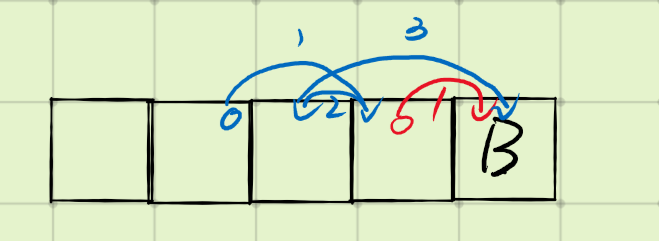
这啥意思?

就是到最右端点的两种方案

如果我们用一个数组\(f[i]\)来表示经过了\(i\)点左边的所有点后,最后到达\(i\)这样的情况的方案数

那么它可以写成这样\(f[i] = f[i - 1] + f[i - 3]\)

Code

1
2
3
4
5
6
7
8
9
10
11
12
13
14
15
16
17
18
19
20
21
22
23
24
25
26
27
28
29
30
31
32
33
34
35
36
37
38
39
#include <bits/stdc++.h>

using namespace std;

typedef long long ll;
inline ll Read()
{
ll X(0);
char O(getchar());
while (O < '0' || O > '9') O = getchar();
for (; O >= '0' && O <= '9'; O = getchar()) X = (X << 1) + (X << 3) + (O ^ 48);
return X;
}

const ll Maxn = 1e6 + 10, Mod = 998244353;
ll Feb[Maxn] = {1};
ll T, N, A, B;

int dfs(int x)
{
if (x < 3) return 1;
if (Feb[x]) return Feb[x];
return Feb[x] = (dfs(x - 1) + dfs(x - 3)) % Mod;
}

int main()
{
T = Read();
while (T--)
{
N = Read(), A = Read(), B = Read();
if (A > B) swap(A, B);
if (A > 1) A += 1;
if (B < N) B -= 1;
if (B < A) puts("0");
else printf ("%lld\n", dfs(B - A));
}
return 0;
}

就可以了

其实递推更简单,但是没有这个记搜快

过河卒

solution

个人觉得这是一个板子题水题

极其无脑的模拟就可以了

1
2
3
4
5
6
7
8
9
10
11
12
13
14
15
16
17
18
19
20
21
22
23
24
25
26
27
28
29
30
31
32
33
34
35
36
37
38
39
40
41
42
43
44
45
46
47
#include <bits/stdc++.h>

using namespace std;

typedef long long ll;
const int maxn = 50 + 10;
const int mod = 1e9 + 7;

inline int __read()
{
int x(0), t(1);
char o (getchar());
while (o < '0' || o > '9') {
if (o == '-') t = -1;
o = getchar();
}
for (; o >= '0' && o <= '9'; o = getchar()) x = (x << 1) + (x << 3) + (o ^ 48);
return x * t;
}

int n, m, x, y;
ll f[maxn][maxn];
int mx[] = {1, 1, -1, -1, 2, 2, -2, -2, 0};
int my[] = {2, -2, 2, -2, 1, -1, 1, -1, 0};

ll dfs(int x, int y)
{
if (x > n || y > m) return 0;
if (f[x][y] == -1) return 0;
if (f[x][y]) return f[x][y];
return f[x][y] = dfs(x + 1, y) + dfs(x, y + 1);
}

int main()
{
n = __read(), m = __read();
x = __read(), y = __read();
f[n][m] = 1;
for (int i(0); i < 9; ++i) {
int nx = x + mx[i];
int ny = y + my[i];
if (nx < 0 || nx > n || ny < 0 || ny > m) continue;
f[nx][ny] = -1;
}
cout << dfs(0, 0) << endl;
system("pause");
}

嗯,记得开\(long\;long\)我失算了,因为没开,交了三次。。。

难受。。。

奇技淫巧二:疯狂剪枝

那就是遇见不可能有贡献的答案可以直接返回

来点例题?

数的划分(加强版)

solution

我们可以先写一个暴力,康康它可以怎么记忆化

\(DFS\)的时候,我们就记录三个参数

1
2
3
4
5
6
7
8
9
10
11
12
13
14
15
16
17
18
19
20
21
22
23
24
25
26
27
28
29
30
31
32
33
34
35
36
37
38
39
40
41
42
#include <bits/stdc++.h>

using namespace std;

typedef long long ll;
const int maxn = 1e5 + 10;
const int mod = 1e9 + 7;

inline int __read()
{
int x(0), t(1);
char o (getchar());
while (o < '0' || o > '9') {
if (o == '-') t = -1;
o = getchar();
}
for (; o >= '0' && o <= '9'; o = getchar()) x = (x << 1) + (x << 3) + (o ^ 48);
return x * t;
}

int n, k;
int f[205][10][205];

int dfs(int rest, int num, int last)//rest -> 还剩多少, 还应该分几次, last -> 保证枚举出来时单调的
{
if (!num) {
if (rest) return 0;
return 1;
}
int ans(0);
for (int i = last; i <= rest; ++i)
ans += dfs(rest - i, num - 1, i);
return ans;
}

int main()
{
memset (f, -1, sizeof f);
cin >> n >> k;
cout << dfs(n, k, 1) << endl;
system("pause");
}

记忆化一下,代码没怎么变

1
2
3
4
5
6
7
8
9
10
11
12
13
14
15
16
17
18
19
20
21
22
23
24
25
26
27
28
29
30
31
32
33
34
35
36
37
38
39
40
41
42
43
44
#include <bits/stdc++.h>

using namespace std;

typedef long long ll;
const int maxn = 1e5 + 10;
const int mod = 1e9 + 7;

inline int __read()
{
int x(0), t(1);
char o (getchar());
while (o < '0' || o > '9') {
if (o == '-') t = -1;
o = getchar();
}
for (; o >= '0' && o <= '9'; o = getchar()) x = (x << 1) + (x << 3) + (o ^ 48);
return x * t;
}

int n, k;
int f[205][10][205];

int dfs(int rest, int num, int last)
{
if (~f[rest][num][last]) return f[rest][num][last];
if (!num) {
if (rest) return f[rest][num][last] = 0;
return f[rest][num][last] = 1;
}
if (rest < num * last) return f[rest][num][last] = 0;
f[rest][num][last] = 0;
for (int i = last; i <= rest; ++i)
f[rest][num][last] += dfs(rest - i, num - 1, i);
return f[rest][num][last];
}

int main()
{
memset (f, -1, sizeof f);
cin >> n >> k;
cout << dfs(n, k, 1) << endl;
system("pause");
}

看看题解,惊艳了,这种吊打我代码神仙写法都有

当然,我将这种写法呢,只是为了让大家深刻理解一下这的记忆化搜索还有剪枝优化

奇技淫巧三:双向BFS、折半搜索

怎么说?如题!

八数码难题

solution

双向\(BFS\)嘛,对吧?

那就从首尾两端分别搜一次呗

这有什么好处呢?

简单的说,这个东西它及大幅度的剪掉了无用的状态

上图?
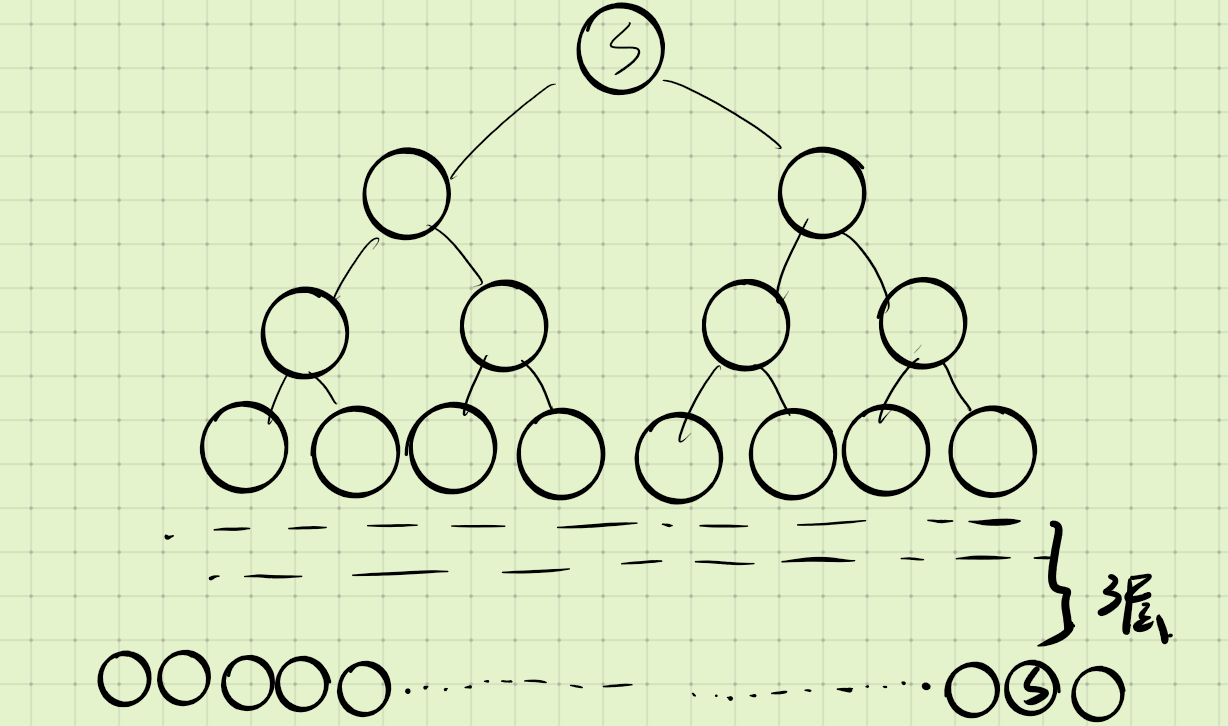
如果要把这个搜索树给遍历完,那么这个的时间复杂度就是\(O(2^{n+1})\)

那么如果\(n\)的数量级在\(30、40\)左右,那么恭喜你,完了!绝对\(TLE\)

但是\(CJ\)我表示不服,我就只会搜索。。。

那么我们稍微修改一下这棵树

怎么讲?

有很多叶子节点时没有用的!!!

那么我们让这棵树有两个根,看看那些叶子结点的信息重合了

重合了就可以更新答案

那么时间复杂度?\(O(\sqrt{2^{n+1}})\),很可以!

如果原来是\(1e12\)的复杂度

根号一下就是\(1e6\),随便跑啊!!!

1
2
3
4
5
6
7
8
9
10
11
12
13
14
15
16
17
18
19
20
21
22
23
24
25
26
27
28
29
30
31
32
33
34
35
36
37
38
39
40
41
42
43
44
45
46
47
48
49
50
51
52
53
54
55
56
57
58
59
60
61
62
63
64
65
66
67
#include <bits/stdc++.h>

using namespace std;

int mx[4] = {1, -1, 0, 0};
int my[4] = {0, 0, 1, -1};
int Now, Next, Ans = 123804765;

map <int, int> en[2];
queue <int> q[2];

void mswap(char &a, char &b){a ^= b ^= a ^= b;}

int Get(int state,int k,int w){
char a[3][3];
short x, y, l = en[w][state];

for(int i = 2; i >= 0; --i)
for(int j = 2; j >= 0; --j){
if(state % 10 == 0) x = i,y = j;
a[i][j] = char((state % 10 - 0) + '0'), state /= 10;
}

short nx = x + mx[k];
short ny = y + my[k];
if(nx < 0 || ny < 0 || nx > 2 || ny > 2) return 0;
mswap(a[x][y], a[nx][ny]);
for(int i = 0; i < 3; ++i){
for(int j = 0; j < 3; ++j){
state = state * 10 + int(a[i][j] - '0');
}
}

if(en[w].count(state)) return 0;
en[w][state] = l + 1;
return state;
}

void work(int x){
Now = q[x].front();
q[x].pop();
for(int i = 0; i < 4; ++i){
Next = Get(Now, i, x);
if(!Next)continue;
if(en[!x].count(Next)){
printf("%d\n", en[0][Next] + en[1][Next]);
exit(0);
}
q[x].push(Next);
}
}

void bfs(){
q[0].push(Now);
q[1].push(Ans);
while(q[0].size() || q[1].size()){
if(q[0].size())work(0);
if(q[1].size())work(1);
}
}

int main(){
scanf("%d", &Now);
if(Now == Ans)puts("0");
else bfs();
return 0;
}

是吧,挺简单的

奇技淫巧四:IDA*

来到例题?

铁盘整理

Code
1
2
3
4
5
6
7
8
9
10
11
12
13
14
15
16
17
18
19
20
21
22
23
24
25
26
27
28
29
30
31
32
33
34
35
36
37
38
39
40
41
42
43
44
45
46
47
48
49
50
51
52
53
54
55
56
57
58
59
60
61
62
63
64
#include <bits/stdc++.h>

using namespace std;

typedef long long ll;
const int maxn = 1e5 + 10;
const int mod = 1e9 + 7;

inline int __read()
{
int x(0), t(1);
char o (getchar());
while (o < '0' || o > '9') {
if (o == '-') t = -1;
o = getchar();
}
for (; o >= '0' && o <= '9'; o = getchar()) x = (x << 1) + (x << 3) + (o ^ 48);
return x * t;
}

int n, a[maxn], f[maxn], limit;

inline int _abs(int x)
{
if (x < 0) return -x;
return x;
}

inline int Check()
{
int res(0);
for (int i(1); i <= n; ++i)
res += (_abs(a[i] - a[i + 1]) != 1);
return res;
}

void bdfs(int dep, int pre)
{
int g = Check();
if (dep + g > limit) return ;
if (dep > limit) return ;
if (g == 0) {
printf ("%d\n", dep);
system("pause");
exit(0);
}
for (int i = 2; i <= n; ++i)
if (i != pre) {
reverse (a + 1, a + i + 1);
bdfs(dep + 1, i);
reverse (a + 1, a + i + 1);
}
}

int main()
{
n = __read();
for (int i = 1; i <= n; ++i) a[i] = __read(), f[i] = a[i];
sort (f + 1, f + n + 1);
for (int i = 1; i <= n; ++i) a[i] = lower_bound(f + 1, f + n + 1, a[i]) - f;
a[n + 1] = n + 1;
for (; limit <= (n << 1) - 2; ++limit) bdfs(0, 0);
system("pause");
}

骑士精神

Code
1
2
3
4
5
6
7
8
9
10
11
12
13
14
15
16
17
18
19
20
21
22
23
24
25
26
27
28
29
30
31
32
33
34
35
36
37
38
39
40
41
42
43
44
45
46
47
48
49
50
51
52
53
54
55
56
57
58
59
60
61
62
63
64
65
66
#include <cstdio>

int T, X, Y, Get;
const int mx[] = {1, 1, -2, -2, 2, 2, -1, -1};
const int my[] = {2, -2, 1, -1, 1, -1, 2, -2};
char Now[10][10];
char Goal[10][10] = {
{'1','1','1','1','1'},
{'0','1','1','1','1'},
{'0','0','*','1','1'},
{'0','0','0','0','1'},
{'0','0','0','0','0'},
};

inline void Swap(char &x,char &y){x ^= y ^= x ^= y;}

int G()
{
int Cnt = 0;
for (int i = 0; i < 5; ++i)
for(int j = 0; j < 5;++j)if (Now[i][j] != Goal[i][j])++Cnt;
return Cnt;
}

void IDA_STAR(int x, int y, int Dep, int Limit, int Dir)
{
if (Get)return;
if (Dep > Limit)return;
if (!G())
{
printf("%d\n", Dep);
Get = 1;
return;
}
for (int i = 0; i < 8; ++i)
{
int nx = x + mx[i];
int ny = y + my[i];
if(nx < 0 || nx >= 5 || nx <0 || ny >= 5)continue;
if(i + Dir == 7)continue;
Swap(Now[x][y], Now[nx][ny]);
if (G() + Dep <= Limit)IDA_STAR(nx, ny, Dep + 1, Limit, i);
Swap(Now[x][y], Now[nx][ny]);
}
}

int main()
{
scanf("%d",&T);
while(T--)
{
Get = 0;
for (int i = 0; i < 5; ++i)
{
char Ch = getchar();
while((Ch != '0') && (Ch != '1') && (Ch != '*'))Ch = getchar();
Now[i][0] = Ch;
for(int j = 1; j < 5; ++j)Now[i][j] = getchar();
for(int j = 0; j < 5; ++j)
if(Now[i][j] == '*') X = i, Y = j;
}
for (int i = 0; i <= 15; ++i)IDA_STAR(X, Y, 0, i, 8);
if (!Get)puts("-1");
}
return 0;
}

我可能没时间写了,好网站
